Biomass Shredder BMS
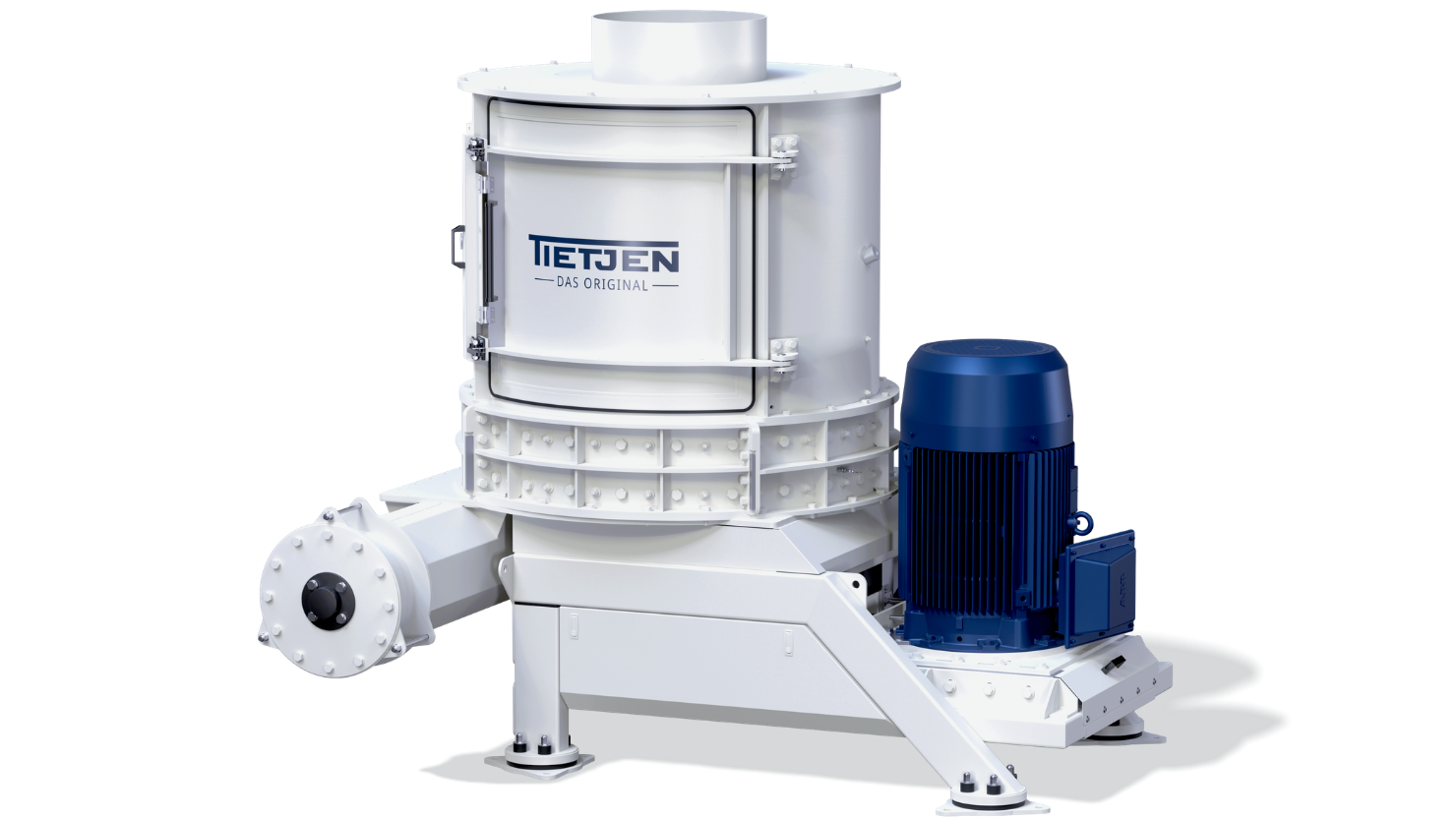
Grinding technology for biogas plants
- Makes difficult-to-ferment materials such as solid manure usable
- Highest throughput of more than 15 t/h
- Increases biogas yield and prevents floating layers
- No blockages and insensitive to impurities
Grinder for Biogas Plants
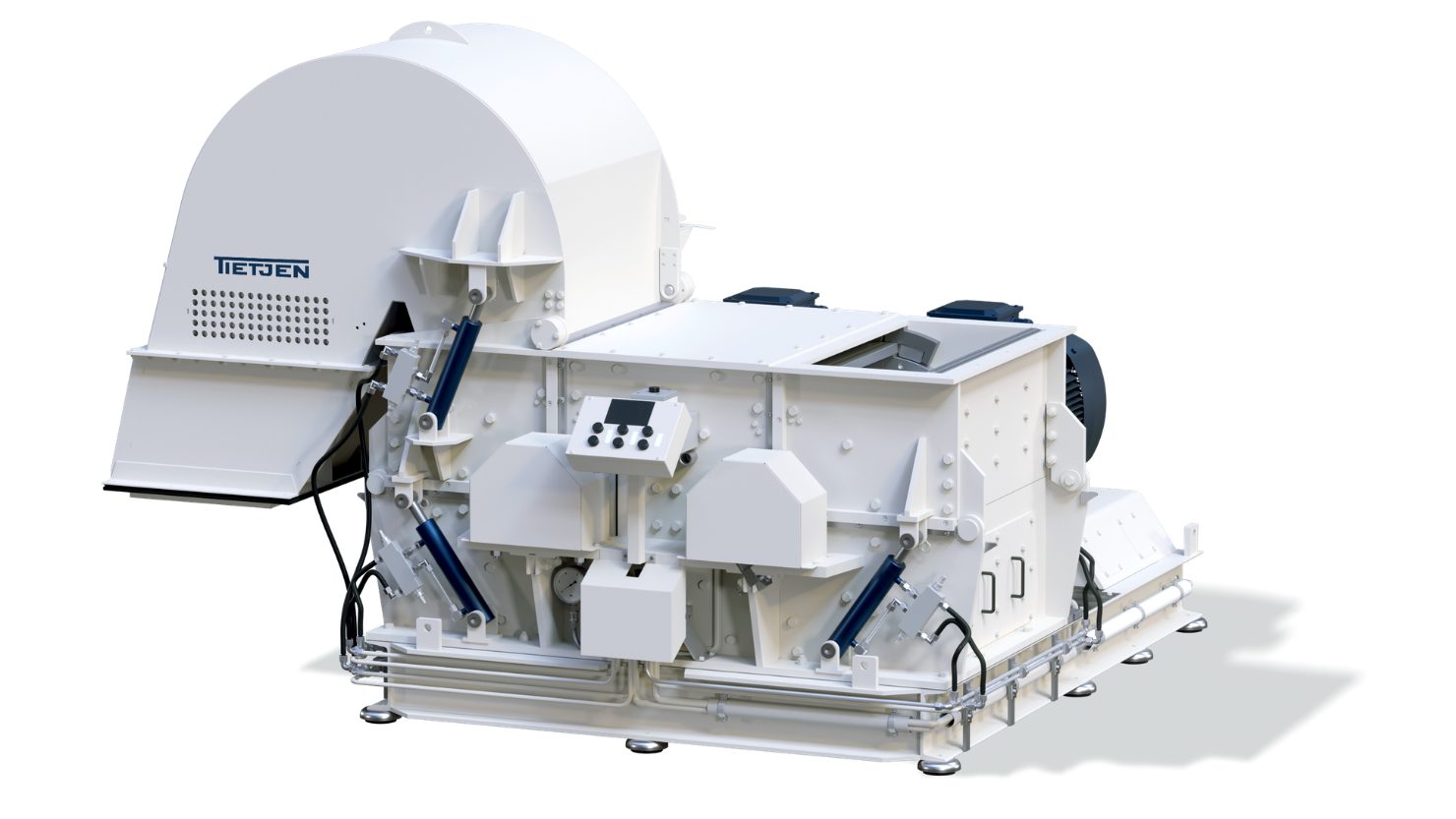
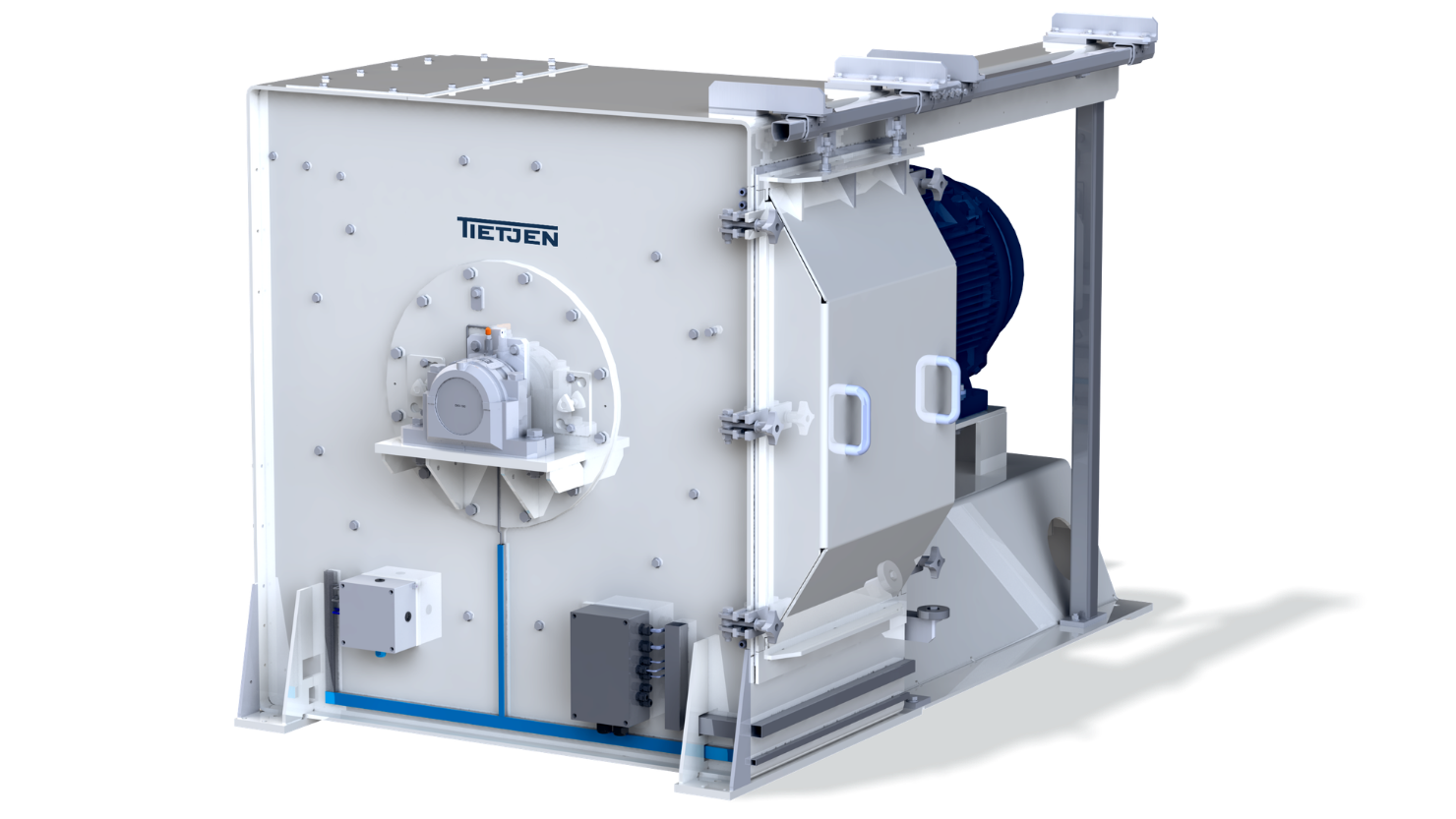
The Biomass Shredder BMS is a vertical grinder that efficiently and homogeneously processes biomasses for biogas plants. The shredding and disintegration result in a higher gas yield and difficult substrates such as solid manure, silage, grass, straw, sugar beet or other crops can be made usable.
Take Advantage of these Benefits
- Efficient particle size reduction of even the most difficult substrates
- Flexibility and economy using alternative raw materials
- High throughput rates of > 15 t/h (depends on substrate)
- Process optimisation through better pumping and agitating properties, minimisation of the floating layer
- Robust welded construction for continuous industrial operation (24/7)
- Impact parts and beaters made of wear-resistant materials such as wear-resistant steel and tungsten carbide
- Clog-free operation due to discharge in the bottom of the impact chamber
- Resistant to impurities, as no sharp tools are used
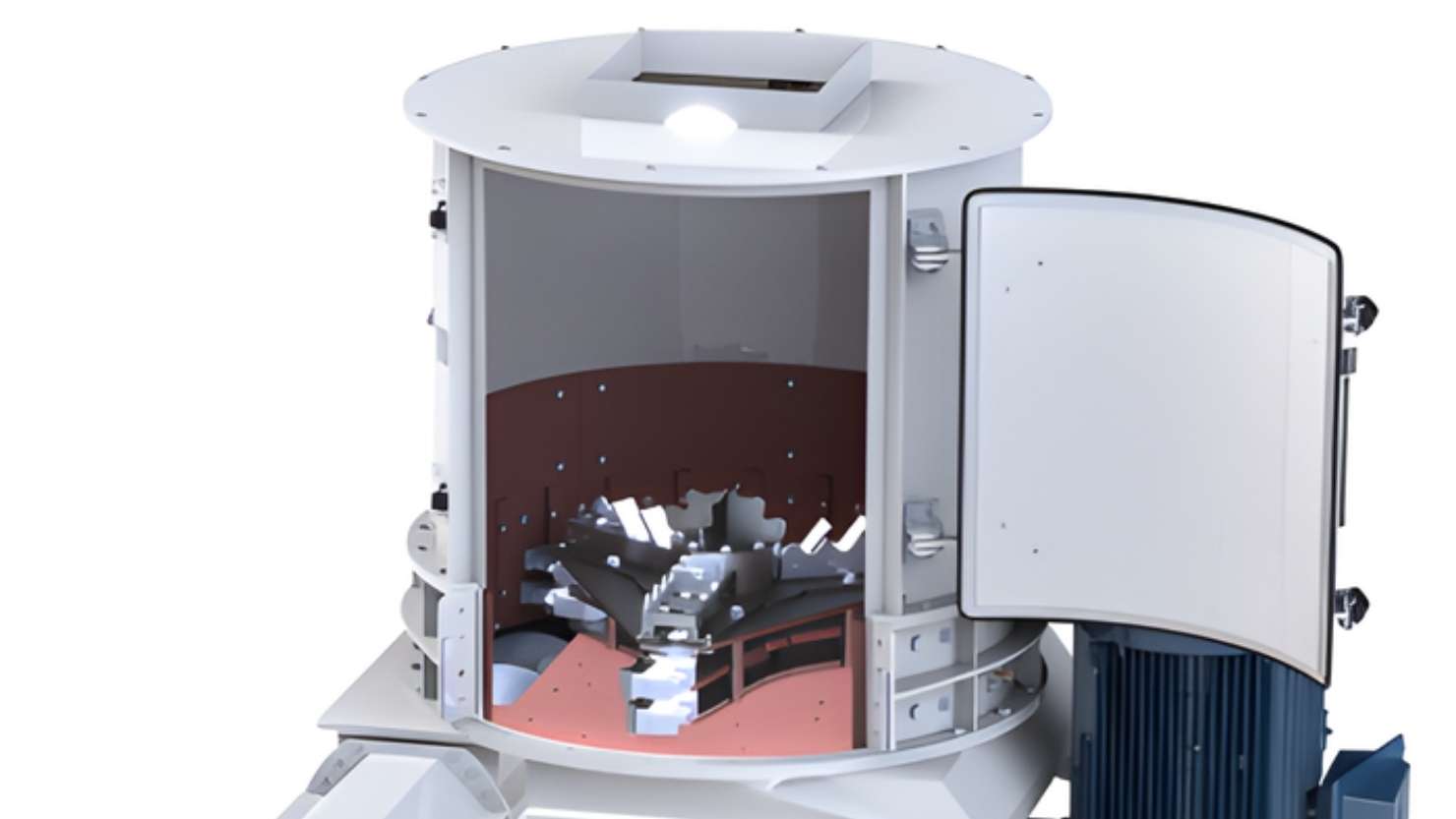
- Large maintenance door with platform ensures maximum accessibility
- Position of the maintenance door can be adjusted in 90° steps to suit the conditions on site
- Minimal wear costs due to replaceable shredding tools on the beater
- Easy to change wear plates due to outside screw connection
- Easy removal of heavy parts by crane traverse with chain hoist (option)
- Door securing with key transfer system
- Monitoring of unbalance, contaminant ingress and vibrations by means of vibration sensor
- Sensors for monitoring the bearing temperature


Technical Data
| Machine types | BMS 1200 | BMS 1500 | BMS 1500-L |
| Throughput capacity (t/h) | up to 10 t/h | > 15 t/h | > 15 t/h |
| Rotor speed (rpm) | 1000 – 1200 rpm | 750 – 900 rpm | 750 – 900 rpm |
| Number of beaters (pieces) | 4 | 6 | 6 |
| Dimensions and Weight | |||
| Diameter housing (mm) | 1200 mm | 1500 mm | 1500 mm |
| Height housing (mm) | 1290 mm | 1210 mm | 1510 mm |
| Length x Width x Height (mm) | 2535 x 1546 x 2440 mm | 2700 x 1730 x 2360 mm | 2700 x 1730 x 2660 mm |
| Weight incl. motor (approx. kg) | 3600 kg | 4800 kg | 4900 kg |
| Drive | |||
| Three-phase motor (kW) | 55/75/90 kW | 110/132 kW | 110/132 kW |
Download
All about the BMS
When stalks are simply cut, the protective lignin layers on the outside remain largely intact. This layer is only broken at the cut edges. This means that the surface area available for microbial degradation is much smaller than in the case of defibration, where the entire stalk structure is largely destroyed. The specific surface area available to microorganisms for degradation is significantly larger in the case of defibration. This leads to faster and more complete degradation of the organic matter contained and thus to an increase in biogas yield. At the same time, stirring energy is saved and the risk of floating layers is minimised.
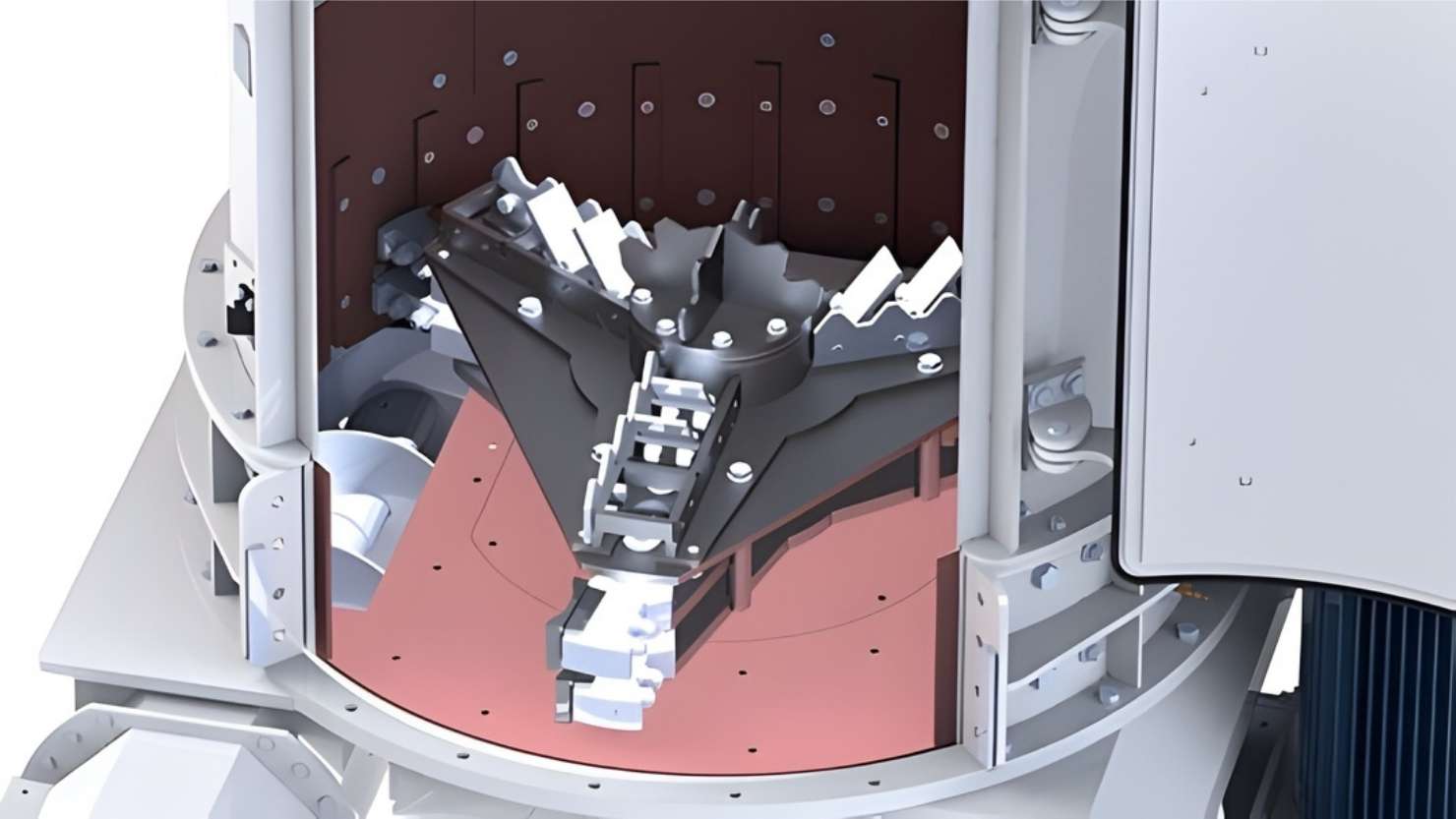
The biomass, such as solid manure, straw or silage, is fed into the machine from above, pre-shredded by a ripping comb above the rotor and then enters the impact zone. Here, the biomass is shredded by a fast-rotating rotor with beaters and impact bars made of wear-resistant material.
The beaters mounted on the rotor cause blunt defibration, resulting in a homogeneous and well-broken-down substrate that is ideally prepared for anaerobic digestion.
During the development of the BMS, particular emphasis was placed on ease of maintenance. Time, costs and ergonomics were all taken into account:
- Minimal wear costs thanks to replaceable teeth on the beater
- Easy-to-replace wear plates thanks to external screw connections
- Large maintenance door ensures maximum accessibility
- Maintenance platform on the maintenance door
- Easy removal of heavy parts thanks to crossbeam with chain hoist (optional)
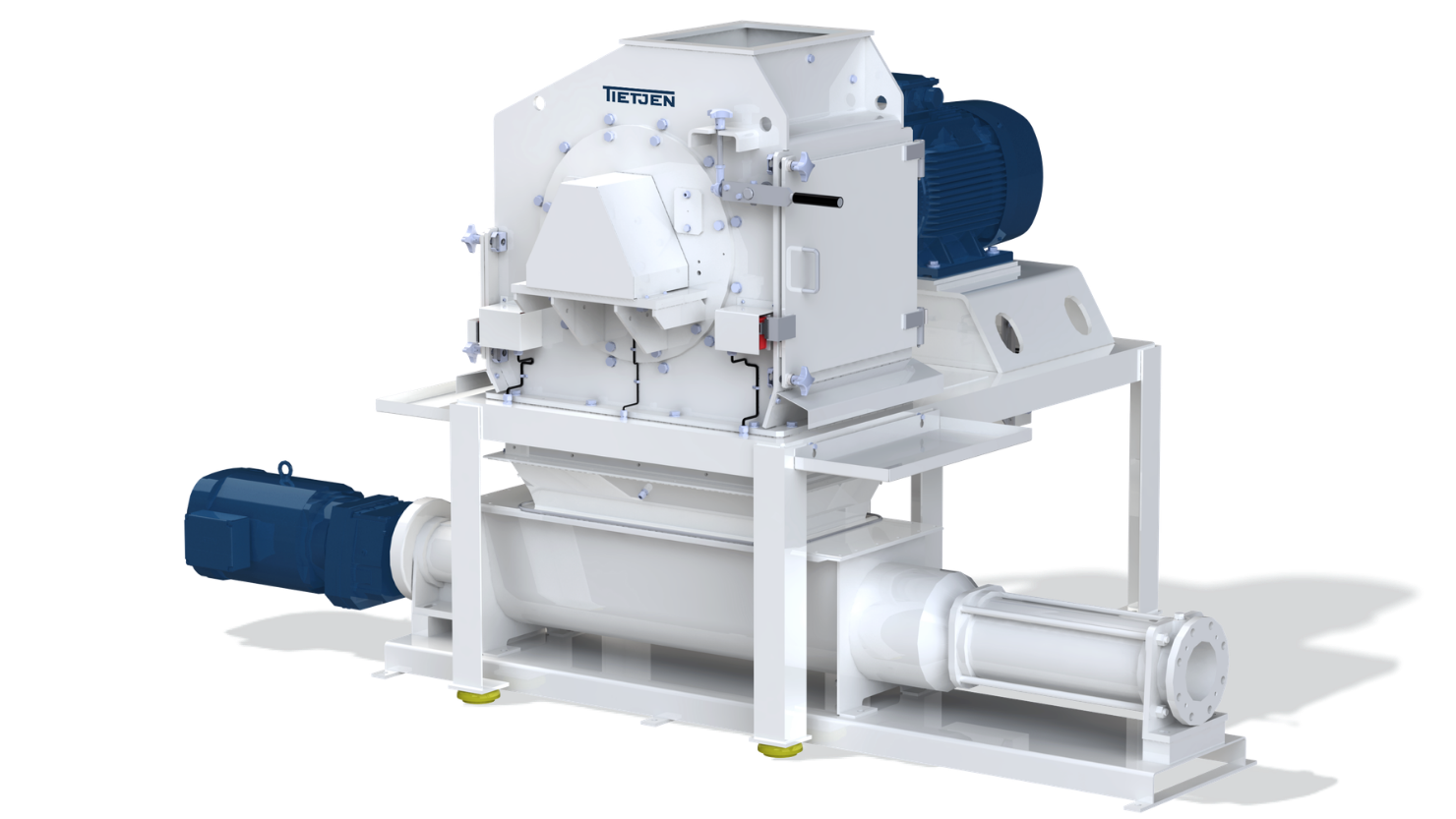
Liquid or dry feeding into the biogas plant – the BMS can do both!
The BMS biomass shredder offers you maximum flexibility in substrate feed to the fermenter. After shredding, the substrate can be fed either by screw conveyor or by “liquid feeding” via a pump system – depending on the requirements of your biogas plant.
Liquid feeding via pumps enables transport over longer distances, can supply several fermenters at the same time and allows liquids to be mixed in before the fermenter.
The BMS can be easily integrated into a liquid feed system.
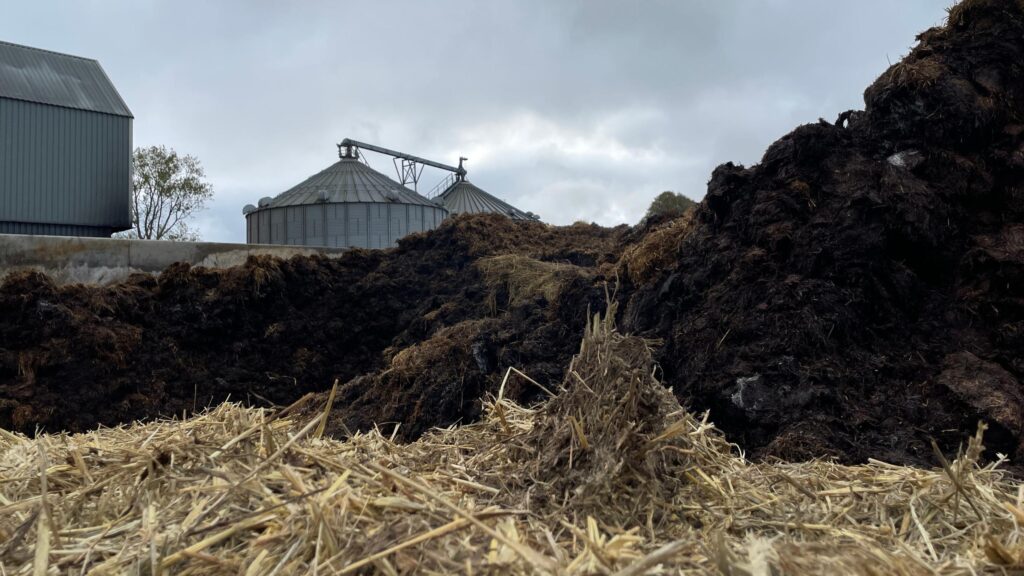
The BMS helps biogas plant operators to make substrates that were previously difficult to ferment available for the biogas plant. Typical examples are solid manure, pig manure and straw.
In addition to its use in biogas plants, the BMS can also shred bark, wood or miscanthus. Typical areas of application include the production of peat substitutes, pellets or mulch.
The BMS operates without screens. This means there is no risk of clogging or damage from foreign matter. The biomass is ground between the beaters and the impact area. This effectively destroys the stalk structure and efficiently makes fermentable components accessible to microorganisms. Long fibres are additionally shortened by the ripping combs. The fineness is determined by the rotor speed, beater shape, throughput and size of the outlet opening. This means that the customer can determine the fineness themselves. All stalks are completely destroyed.
There is a particle size distribution. Some components of the defibrated stalks may still have lengths of up to 10 cm. Most components are significantly shorter. In principle, however, all fibres are crushed/ground. Fibre length alone is therefore not a good measure of size reduction. Disintegration is more important. Our operators are very satisfied with the disintegration work of the BMS
The BMS was developed by Tietjen and is manufactured entirely in Germany.
Ferromagnetic metals are separated by a magnetic separator at the inlet shaft. Field stones up to a certain size are ground into sand. Other foreign matter that could cause problems in the machine is detected by a vibration sensor. The machine then stops automatically, issues a fault message and the foreign matter can be removed.
This minimises downtime and ensures a continuous supply of substrate to the biogas plant. This guarantees maximum consistent biogas production and avoids slumps due to interruptions in feeding. In addition, operators do not have to respond to unplanned incidents and can use their working time or free time for other purposes. This ensures satisfied employees and, of course, maximum efficiency throughout the entire biogas plant operation.
Our customers find the BMS to be relatively quiet compared to other shredders.

Biogas Lykkeslund
Terrasol
Tell Us about Your Challenge. We´ll Find the Right Solution.
Briefly describe your requirements to us – we will listen, ask the right questions and develop a customised Tietjen solution for your application.