Plant Engineering Organic Waste Management
From organic waste to bioenergy – everything from a single source
- Solutions that suit your needs: compact or large-scale plants
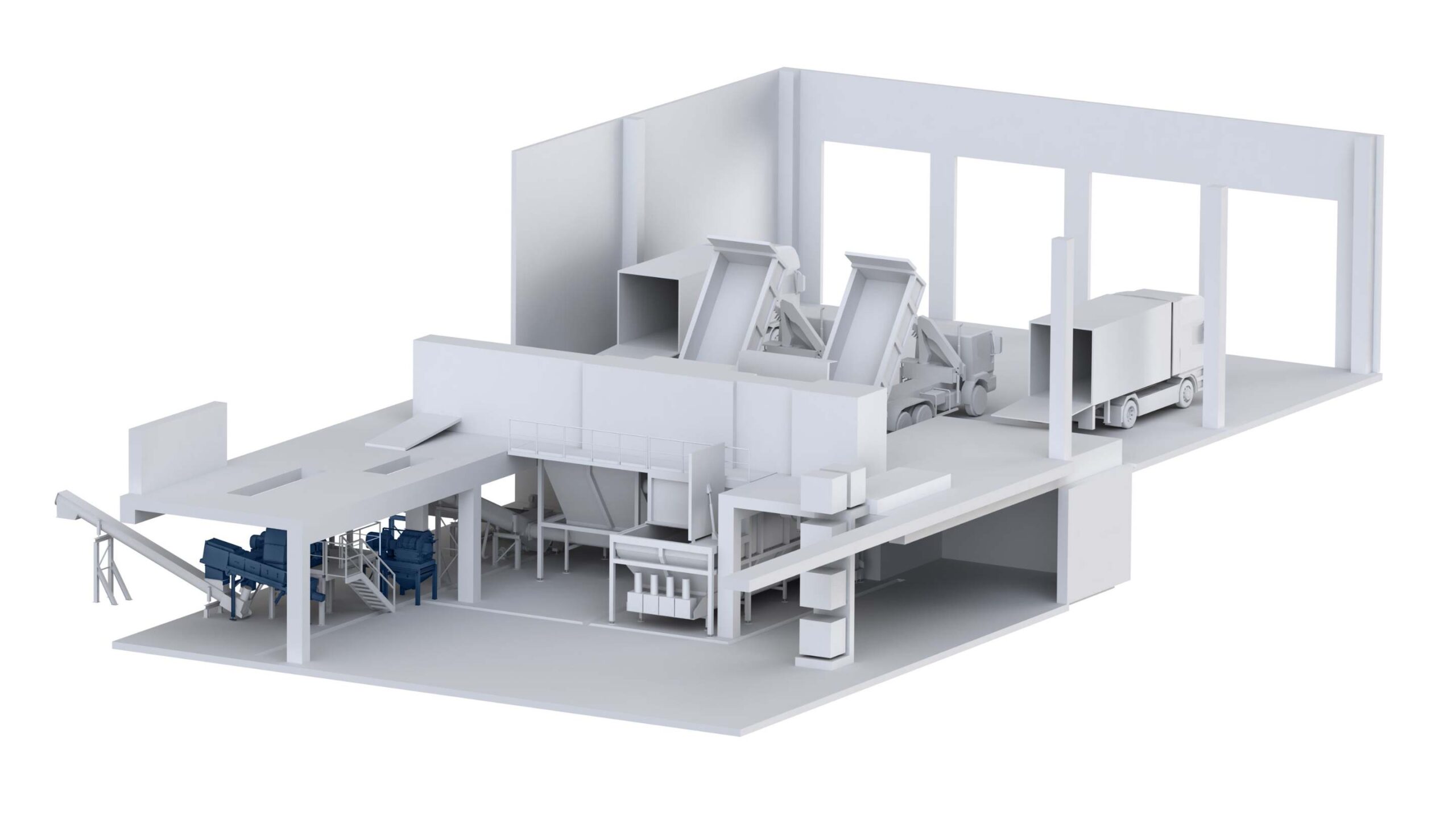
- Everything in one system: reception, dosing, depacking, storage, bin handling, cleaning, pumping and control
- Many years of experience in large-scale international projects
- One contact person from planning to commissioning
Commercial Plants for Organic Waste Treatment
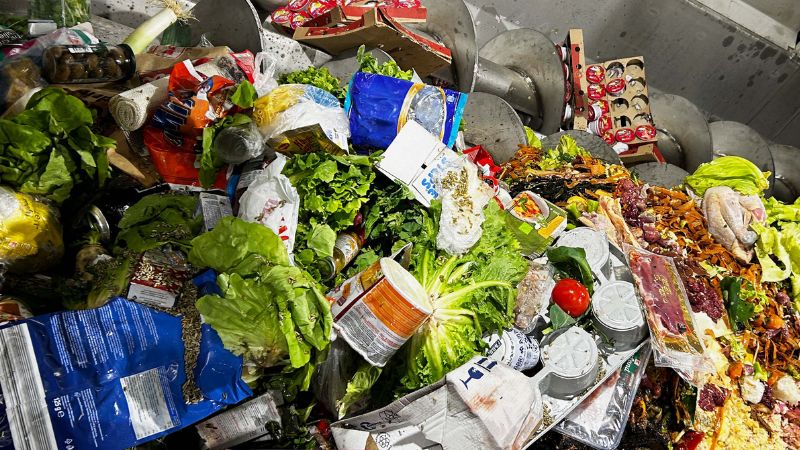
The conditions for efficiently recycling biomass in terms of materials and energy vary throughout the world. However, one issue all countries share is the more or less severe contamination of biomass with non-biogenic substances, such as plastic packaging.
And Tietjen knows: Smooth separation of packaging and organics requires more than just a depackaging machine and a screw press, we provide the plant engineering for industrial organic waste treatment.
Advantages
- Complete solution from a single source
- Minimization of interfaces
- Optimal integration of the depackaging machine into the overall process
- Benefit from our process engineering know-how
- Integration of further process steps
- Consideration of framework conditions such as space conditions, regulations, occupational health and safety
- Comprehensive project support until start-up
- One contact person as project manager
- Mounting possible
How a Project Works
We work with our customers on site to determine the available and required space and work out the optimal layout for the system. We help our customers with concepts and take into account the processes outside the system. We also gladly involve our clients’ experienced staff.
We manufacture machines and system components exactly according to planning specifications. Delivery and assembly are carried out punctually as agreed. When everything comes from a single source, many questions can be answered quickly.
In addition to the actual functionality, we also ensure that aspects of operational safety are considered, that the legal requirements are met, and that appropriate instruction or training of the operating personnel enables professional maintenance and inspection. We are always willing to provide regular training to ensure that all employees are up to date.
Process Details
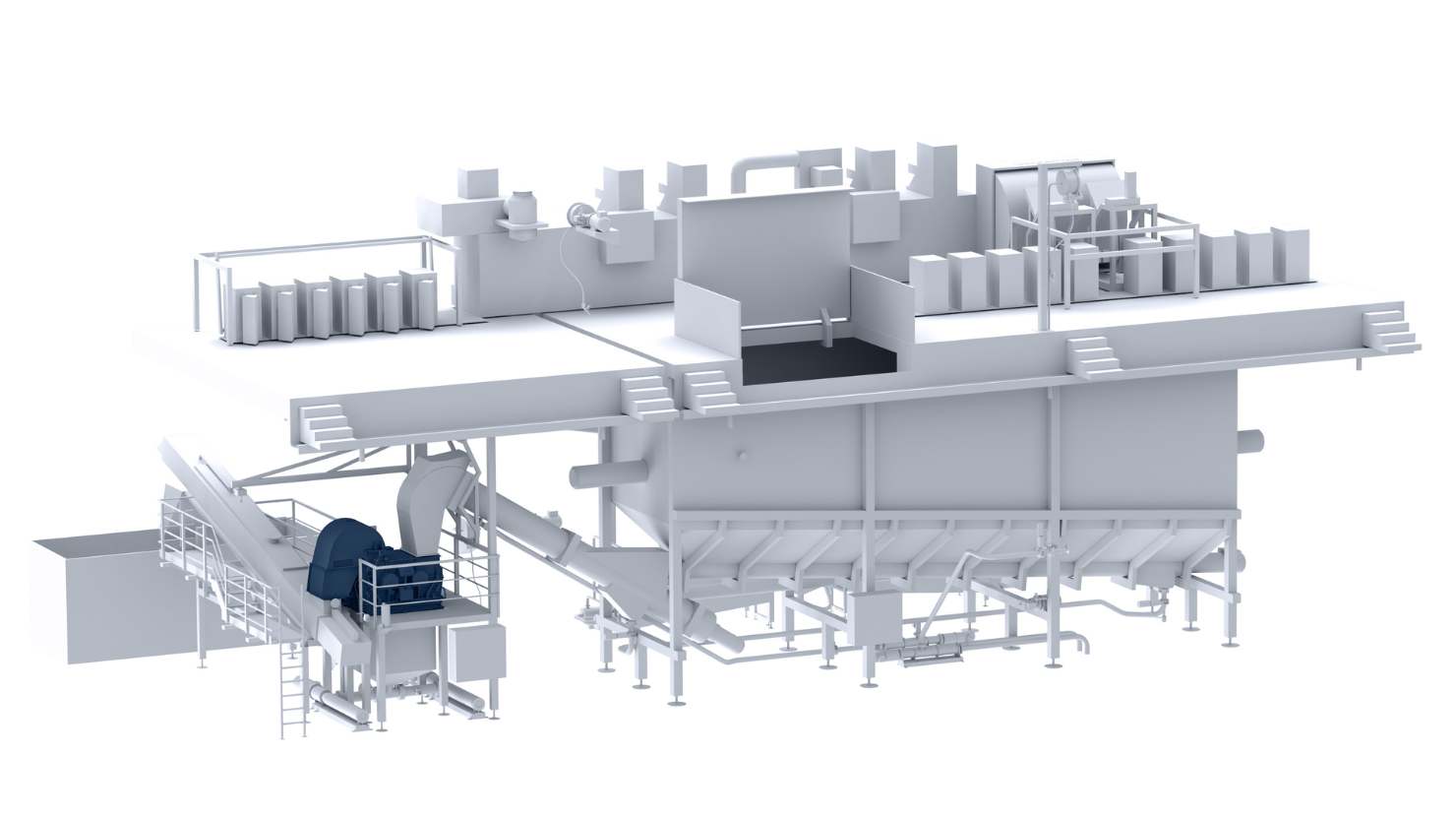
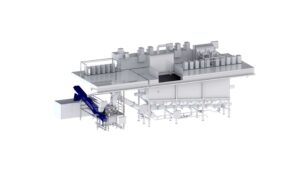
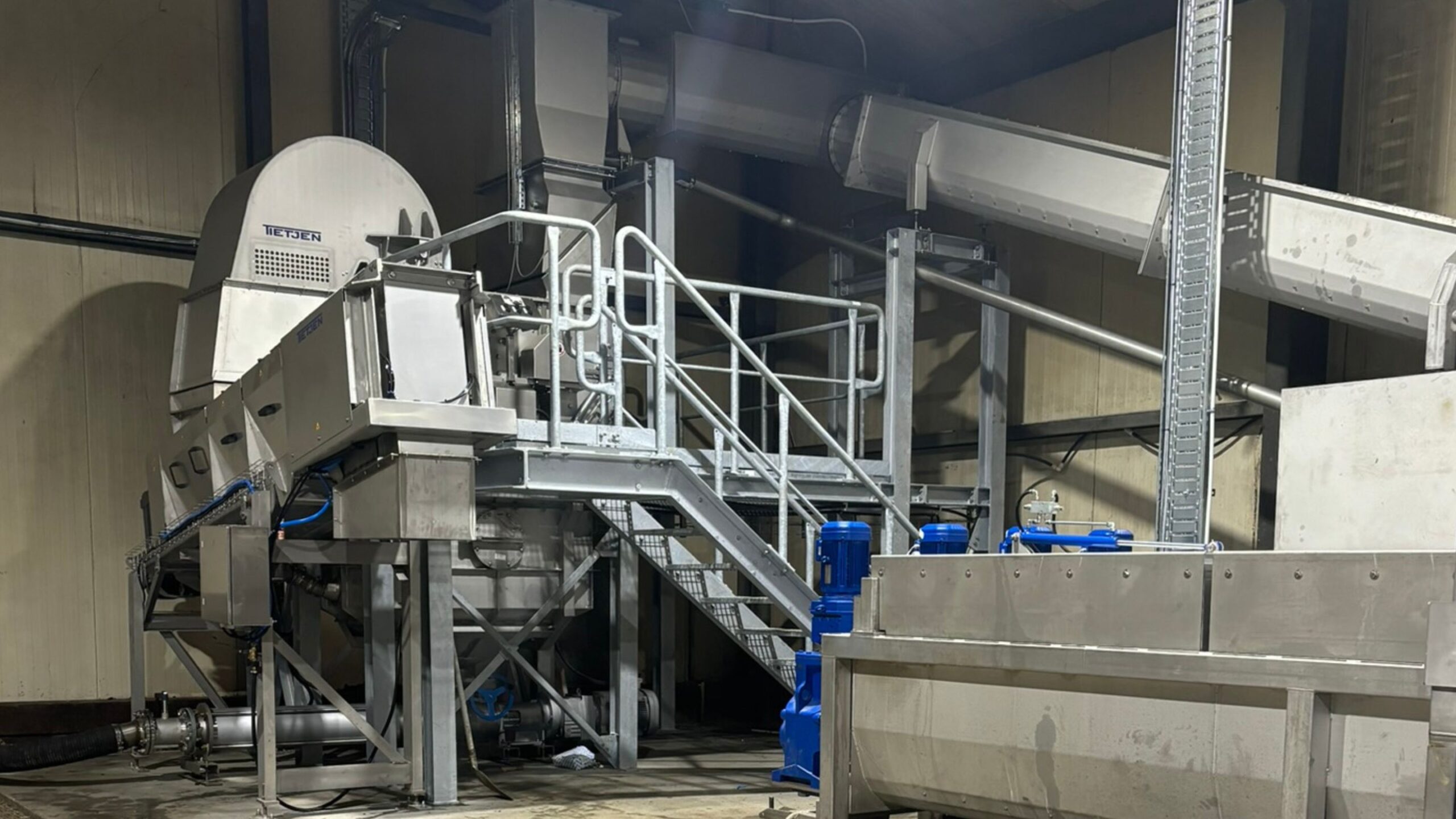
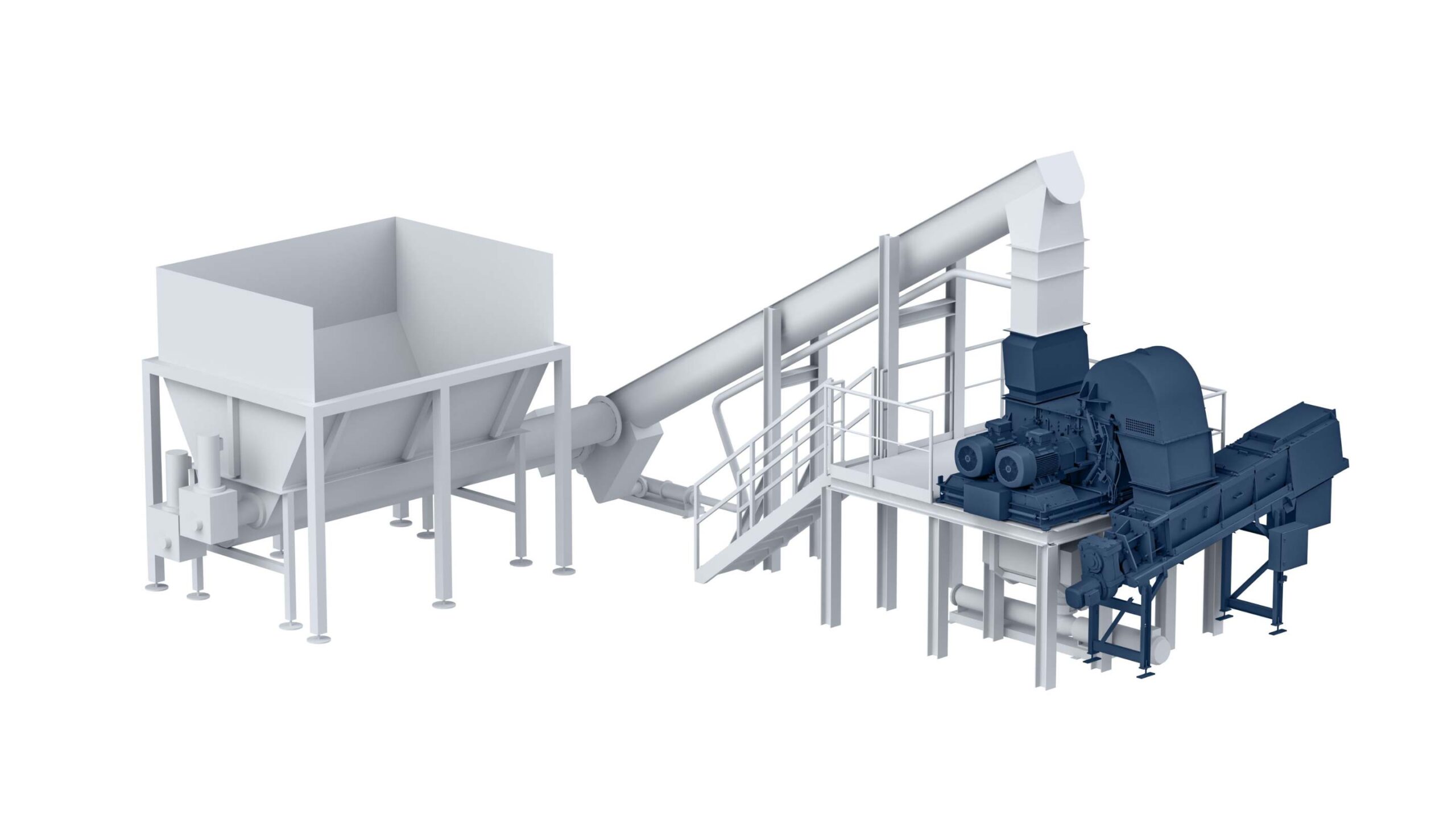
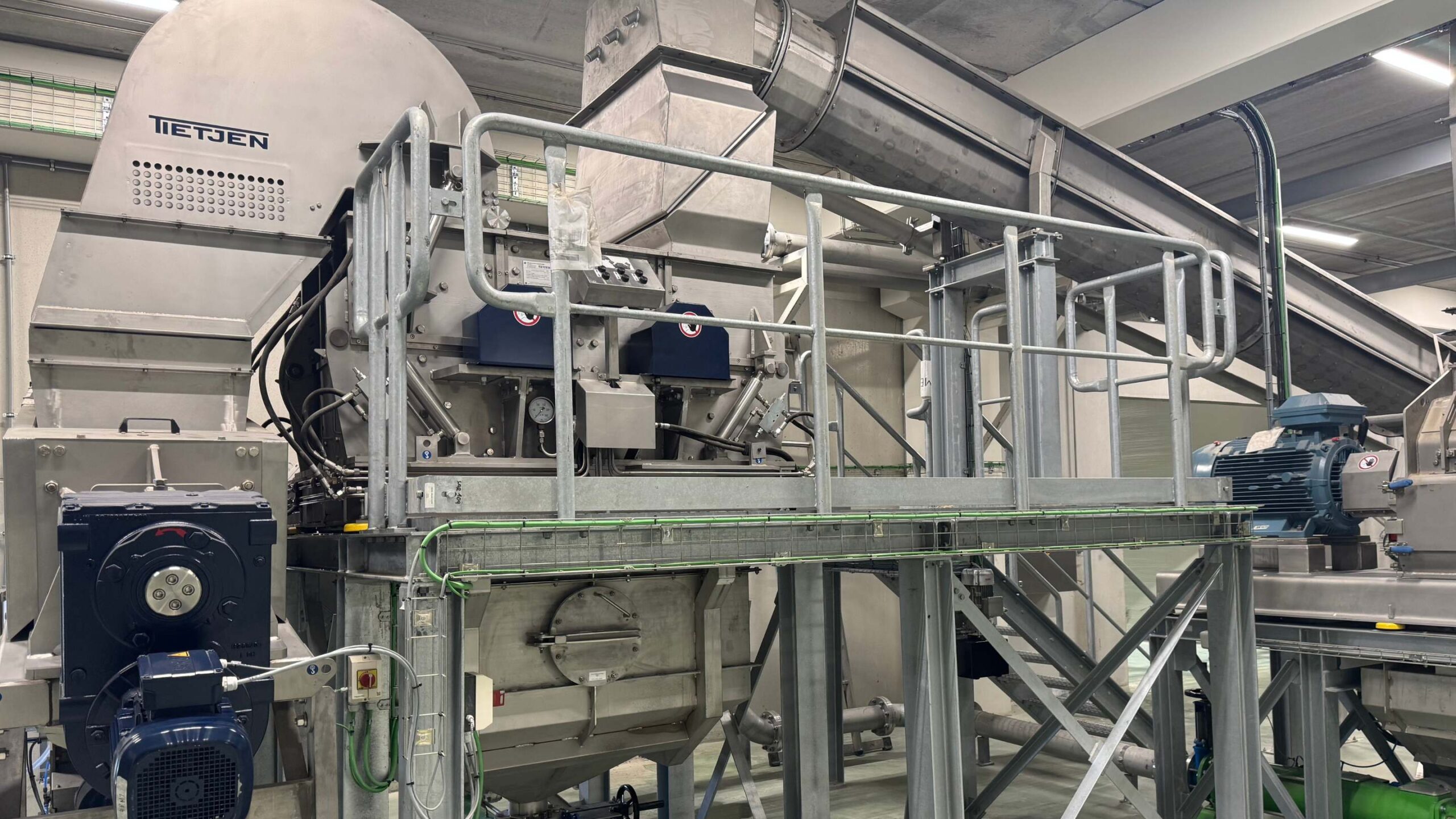
The depackaging machine DRM is at the heart of our plant design. This is supplemented with additional components to empty and clean the containers, store the substrate and provide transport.
Size, type and quantity of contaminants
The size, type and quantity of contaminants in the incoming material have a major influence on mechanical separation with the DRM. In practice, commercially collected organic waste such as food waste usually poses no difficulty.
Large packaging is more challenging; it can in most cases be opened via the receiving equipment into pieces of approx. 150 x 200 mm. Larger quantities of foreign matter made of wood or metal with greater dimensions, however, require a higher plant effort and may even require pre-sorting or pre shredding.
Well prepared from the start
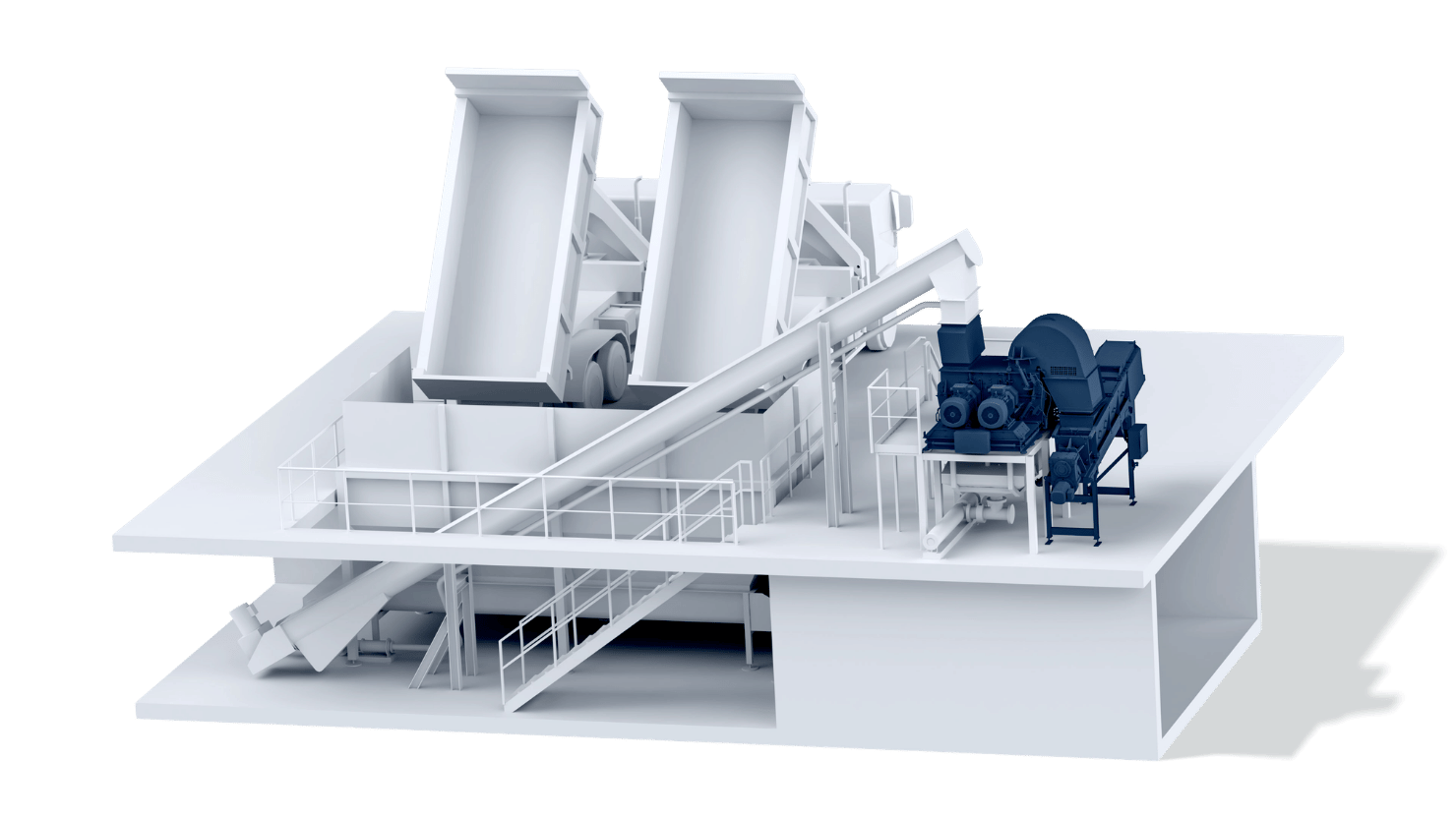
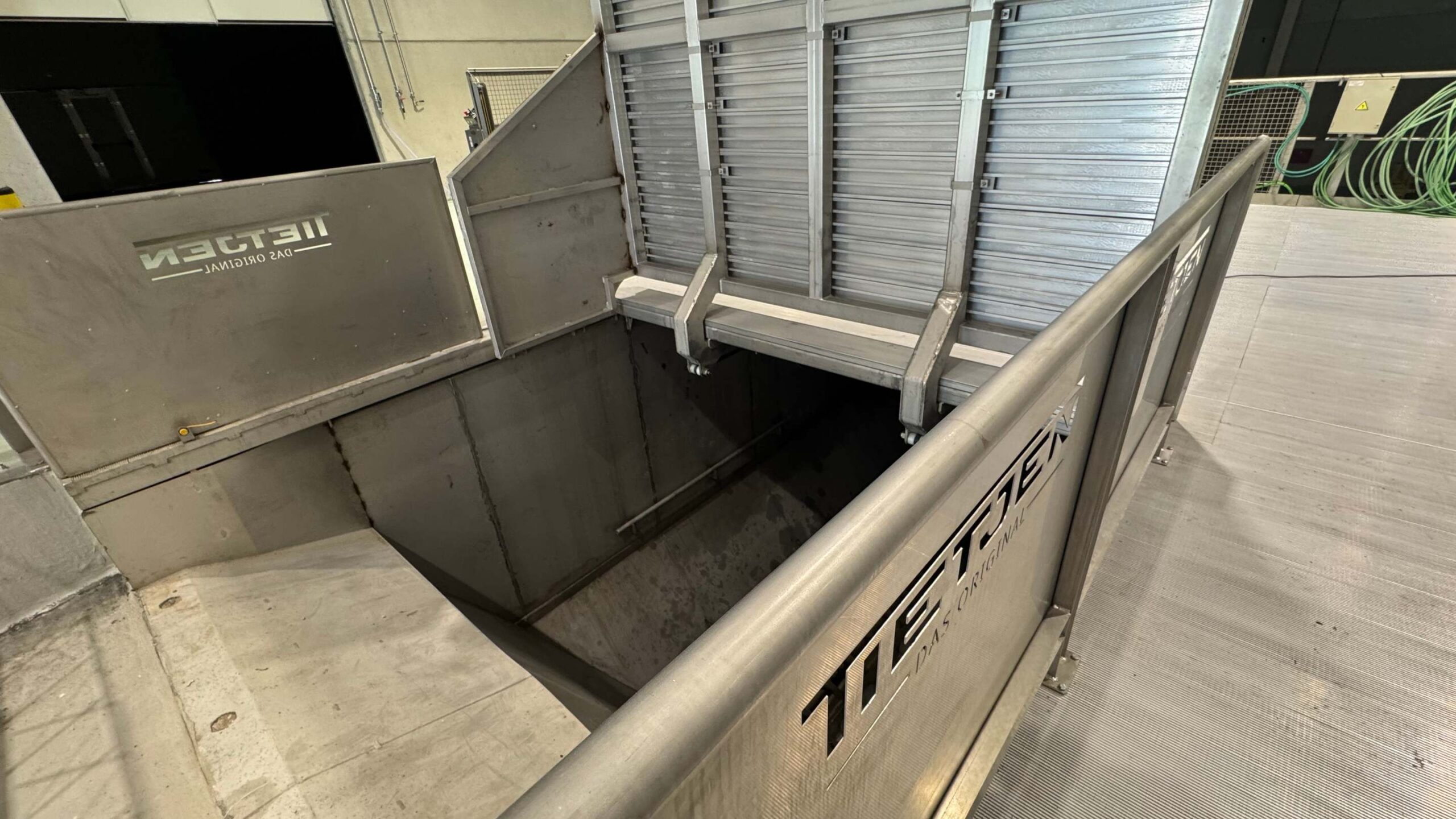
Organic waste is collected regionally and internationally using different collection systems. These include truck mounted skips, large roll of containers, or municipal refuse bins. A waste receiving and dosing bunker must have a volume large enough to buffer a sufficient quantity. Robust technology is essential for discharge from the receiving bunker. Ideally, the bunker already achieves a good pre-homogenisation of the organic waste, opens large packaging, and ensures a uniform substrate feed to the actual separation process.
We design this receiving technology precisely according to the planned throughput and expected waste composition. Proven, robust screws with heavy material thicknesses are used; they are mounted for low wear and matched exactly to the throughput capacity of our depackaging machine DRM. Installation at ground level is possible, as is installation in a basement optimised for truck loading. The receiving container can be equipped with walk-on covers and flaps for truck acceptance.
Multi-screw discharge floor
The predominant type of waste receiving and dosing bunker is the screw discharge floor. Three- or four-screw discharge floors, e.g. for packaged food residues, with a volume of approx. 40–60 m³ are common. Sizes of 15 m³ for wheel-loader filling or up to approx. 120 m³ are also possible. Corrosion-resistant stainless steel is used throughout.
450 conveyor screws / conveying screws
Reliable stainless-steel conveying screws transport the organic waste from the receiving and dosing bunker to the depackaging machine. The wall thickness and design of the screws ensure durability and even dosing without blockages, thereby guaranteeing trouble-free operation throughout the year and under changing material flows. To enable the pre-crushing of large packaging without a shredder, particularly thick material sections, fully welded internals, and 100% liquid-tight seals are used.

Automatic and semi-automatic
Biowaste is delivered for waste treatment using different collection units, often including individual large waste bins transported by truck. Depending on the number of waste bins per day, automating the emptying process makes sense. Single and multi-bin tipping stations are possible. Automatic pre-rinsing after emptying is standard, reducing carryover of biowaste into a downstream bin washing machine. Lifting over a ground-level waste receiving bunker is possible, as is emptying into a recessed bunker or from a platform. For high throughput, fully automated bin handling including transport can be offered. In close coordination with our customers and taking the site situation into account, we select the optimal solution.
Effective separation of foreign and interfering materials
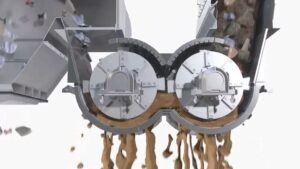
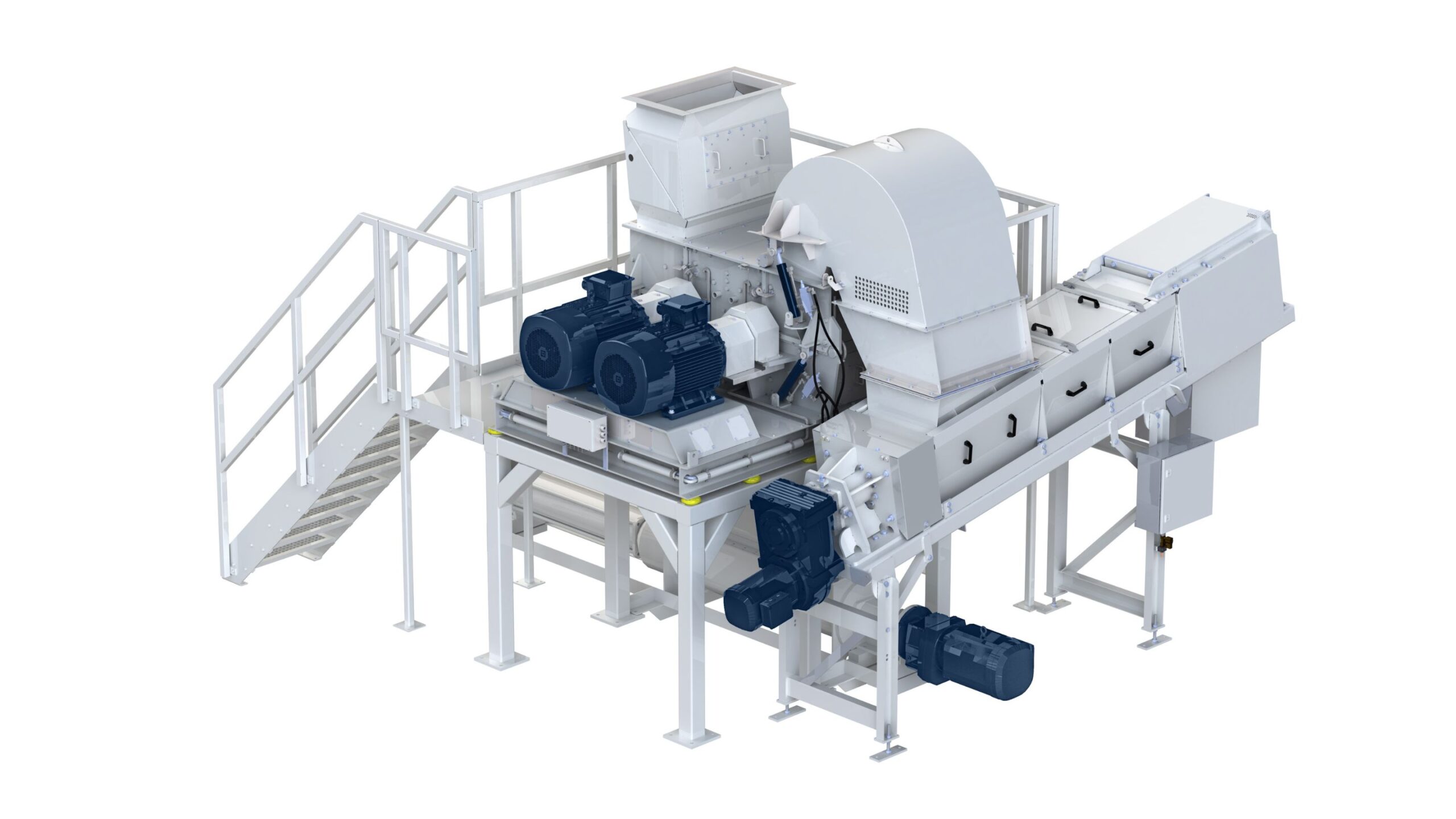
Via a receiving container and a conveying screw, the input material is transported into the DRM. The depackaging machine is designed for reliable separation of the biogenic fraction from foreign and contaminant materials in various waste streams. The goal is optimal cleaning of the respective substrate right at the beginning of the process. Its special design enables high separation performance with significantly reduced energy consumption per tonne. This makes the high-performance depackaging machine technically and economically attractive for customers who want to continuously separate larger quantities of waste.
Dryer material lowers disposal costs
The foreign matter separated by the DRM is typically sent to incineration. The liquid content in this foreign matter increases disposal costs. That is why our screw press dewaters it. Additional separated liquids are collected and returned to the organic fraction. The screw press consists of a solid stainless-steel screw surrounded by segmented screens. These screens separate out liquids. The screw press is always adapted in terms of performance and design to the type of waste and the throughput of the depackaging machine.
Guaranteed clean substrate
Depending on the organic material processed by the DRM, post-cleaning of the substrate can be carried out with our BioRefiner BRF. We recommend this process step for heavily contaminated material and whenever very high purity is required due to current waste regulations.

Automatically clean in quick-wash mode
Waste bins must be cleaned after emptying so that they can be returned to households or supermarkets in hygienic condition. The following factors are decisive for washing: throughput, effectiveness, and energy and water consumption. Washing machines can be filled automatically or manually, directly from the tipping stations. Normally, bins are transported to the clean area during or shortly after washing. There, they can be automatically discharged, buffered, or removed manually. They are then ready to be loaded back onto the truck. We adapt the washing machine technology to the required throughput.
Further technologies for optimum separation results
It can make sense to supplement our proven DRM technology with additional processing steps. These include screening or dissolving technologies before processing. After processing, glass and “grid” separation can be used. If the biowaste is very heterogeneous or very large foreign materials need to be opened up, a shredder can be used. A bag opener is always useful when very large packaging needs to be opened. It stops at large contaminants, which can then be easily removed manually. For a “lean” plant setup, the bag opener is usually integrated into the receiving container. This can positively influence the separation result of the plant. Star screens are an alternative to the shredder when large components need to be discharged continuously from the process without being crushed.

Tell Us about Your Challenge. We´ll Find the Right Solution.
Briefly describe your requirements to us – we will listen, ask the right questions and develop a customised Tietjen solution for your application.
Tell Us about Your Challenge. We´ll Find the Right Solution.
Briefly describe your requirements to us – we will listen, ask the right questions and develop a customised Tietjen solution for your application.