More Yield for Biogas Plants
This Reference at a Glance
Customer: Bernd Stricker, operator of a biogas plant in Bakum, Lower Saxony
Application: Break up difficult to ferment materials such as wood fibers for digestion
Solution: Integration of the Tietjen IMPRA mill into the existing biogas plant, crushing of the biomass before fermentation in the digester
Result: With a retention time of 35 days, the single-stage biogas plant’s capacity increased by 30%, and the biogas plant’s substrate savings were 12%
Biogas as an Alternative Energy Source
Along with solar, hydro and wind energy, biogas is a regenerative energy source that helps to save fossil fuels. It is produced in biogas plants from organic material through microbial decomposition. The production process produces both energy (gas) and valuable fermentation substrate, which can be reused as fertiliser in agriculture.
If biogas is burned in a combined heat and power plant (CHP), it can be used to generate electricity and heat. Biogas can also be upgraded to biomethane. It can then be fed into the natural gas grid, stored there and used decentrally to supply electricity and heat, or used as fuel in natural gas vehicles.
More Power with Less Retention Time
Impra for the increase of the biogas yield, Tietjen offered the operator, Bernd Stricker, a process that makes it possible to release nutrients that are difficult to obtain, e.g. from lignified fibres. The yield of the raw material is considerably increased, cellulose that was previously hardly usable – as contained in grass, solid manure and straw – is efficiently tapped for biogas production.
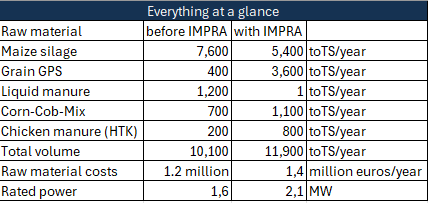
With a retention time of only 35 days, Bernd Stricker increased the capacity of his single-stage biogas plant by 30 % with Impra.
The substrate saving of 12 % fresh mass through higher gas yield also enables the operation of an additional CHP unit. Thanks to the direct processing of threshed grain with IMPRA Mr. Stricker also uses grain batches that are offered spontaneously at favourable prices.
Due to the savings in substrate and the switch to cheaper raw materials in combination with the increased output, the IMPRA system has already paid for itself after a very short time. Even at biogas plants where only some of these effects come into play, Impra is a real economic added value.
Everything at a Glance
The Impra Module
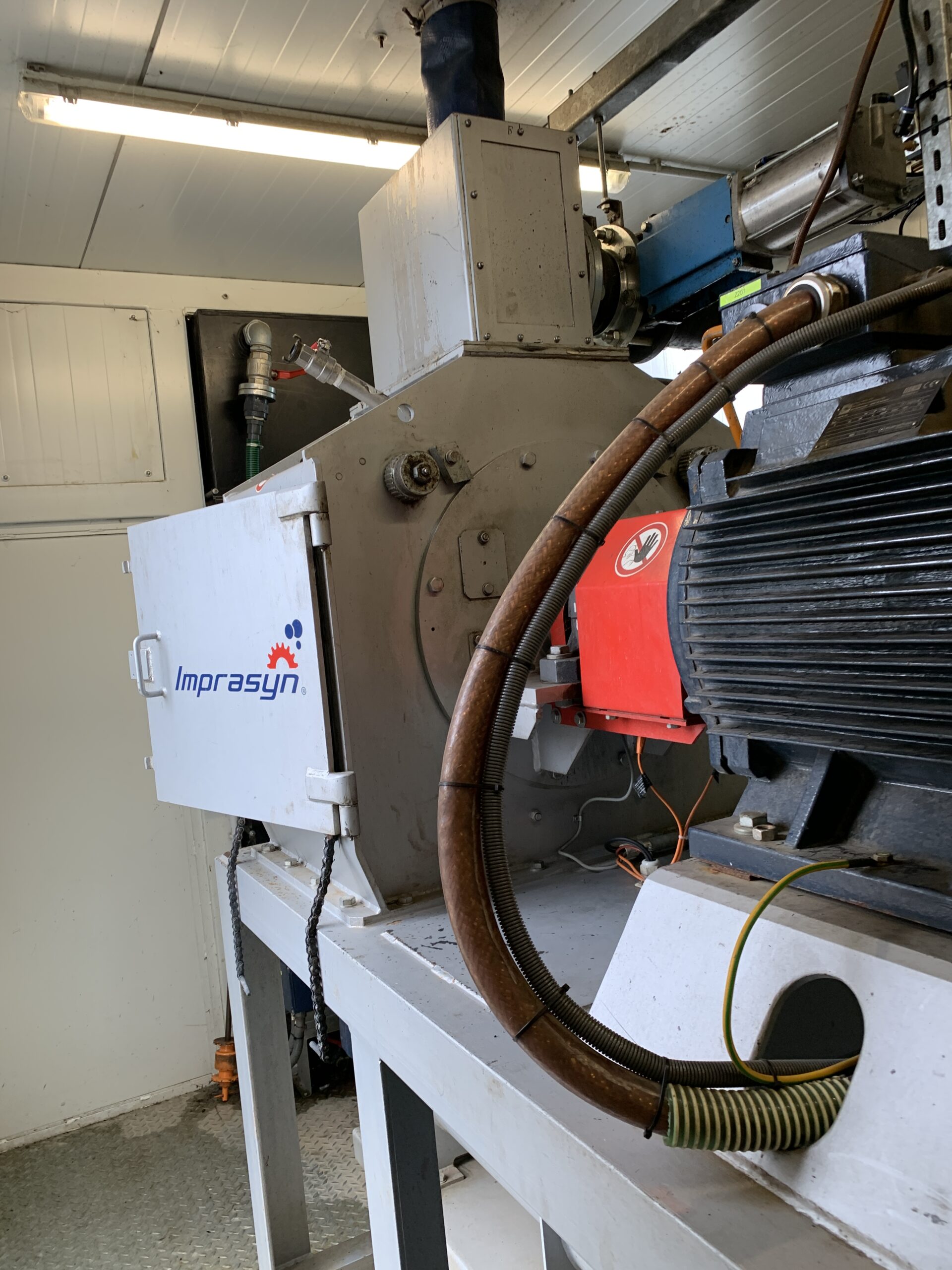
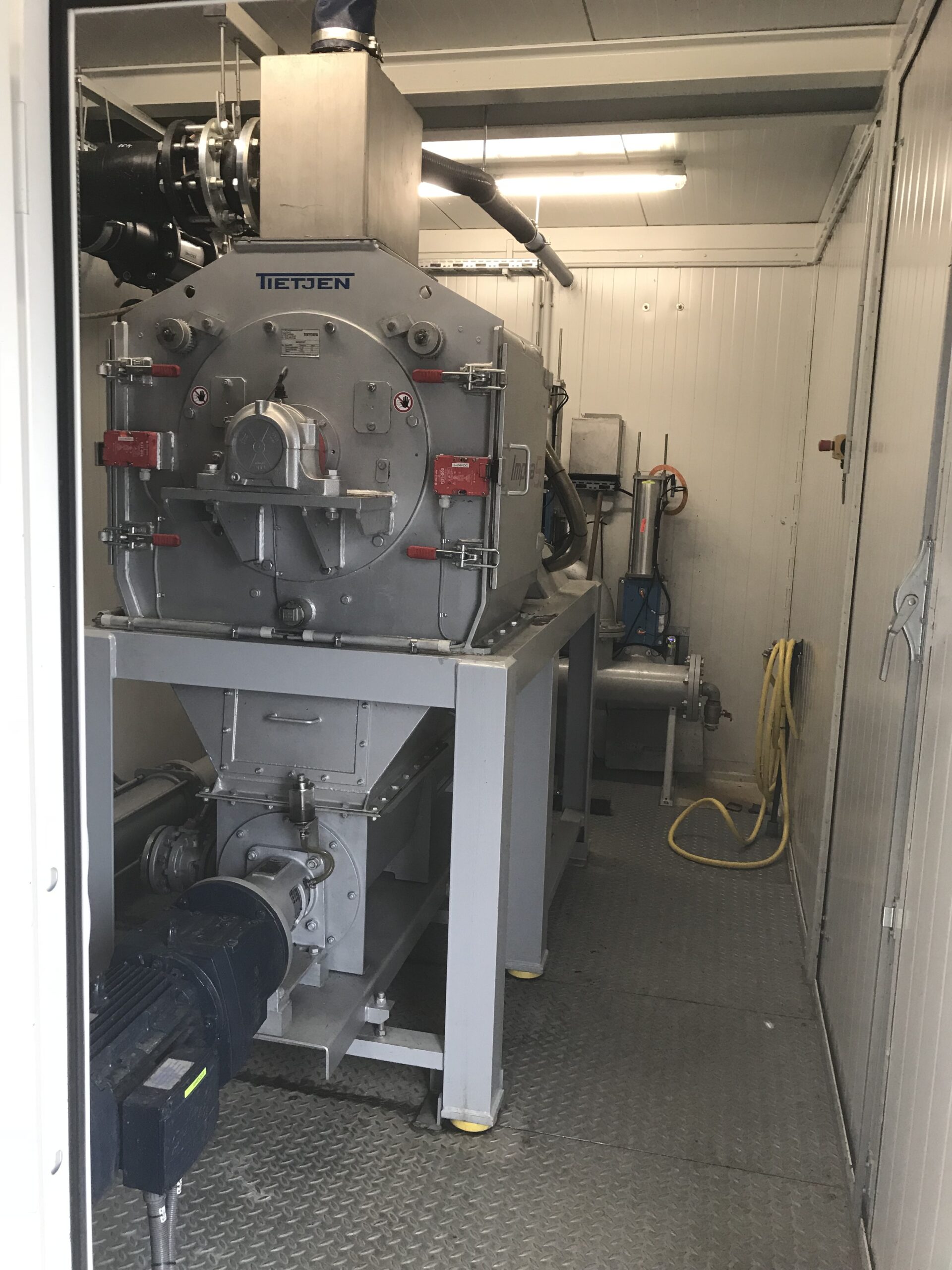
The core component of the IMPRA process is the wet shredder. All parts that are in contact with the product are made of stainless steel. In the grinding chamber, fast-rotating, hardened beaters grind the substrate. A sieve circle completely closes off the grinding chamber. The sieve perforation determines the degree of comminution for the entire substrate, independent of throughput and wear. By adjusting the sieves, it is possible to react to different substrates. Wear parts can be replaced quickly and easily via two large housing doors.
Impurities are sorted out and collected in the foreign object catcher pocket. The housing is protected by armoured, replaceable wear segments. Two eccentric pumps ensure exact metering of the material and conveyance into any number of containers. The self-regulating conveying system works load-dependently from the main drive and guarantees that the shredder is always optimally utilised.
Individually Adapted to Each Biogas Plant
We know about the different framework conditions and requirements of biogas plants and configure the ideal performance, equipment and support for you. In doing so, we adapt our IMPRA process individually to our customers.
Tell Us about Your Challenge. We´ll Find the Right Solution.
Briefly describe your requirements to us – we will listen, ask the right questions and develop a customised Tietjen solution for your application.